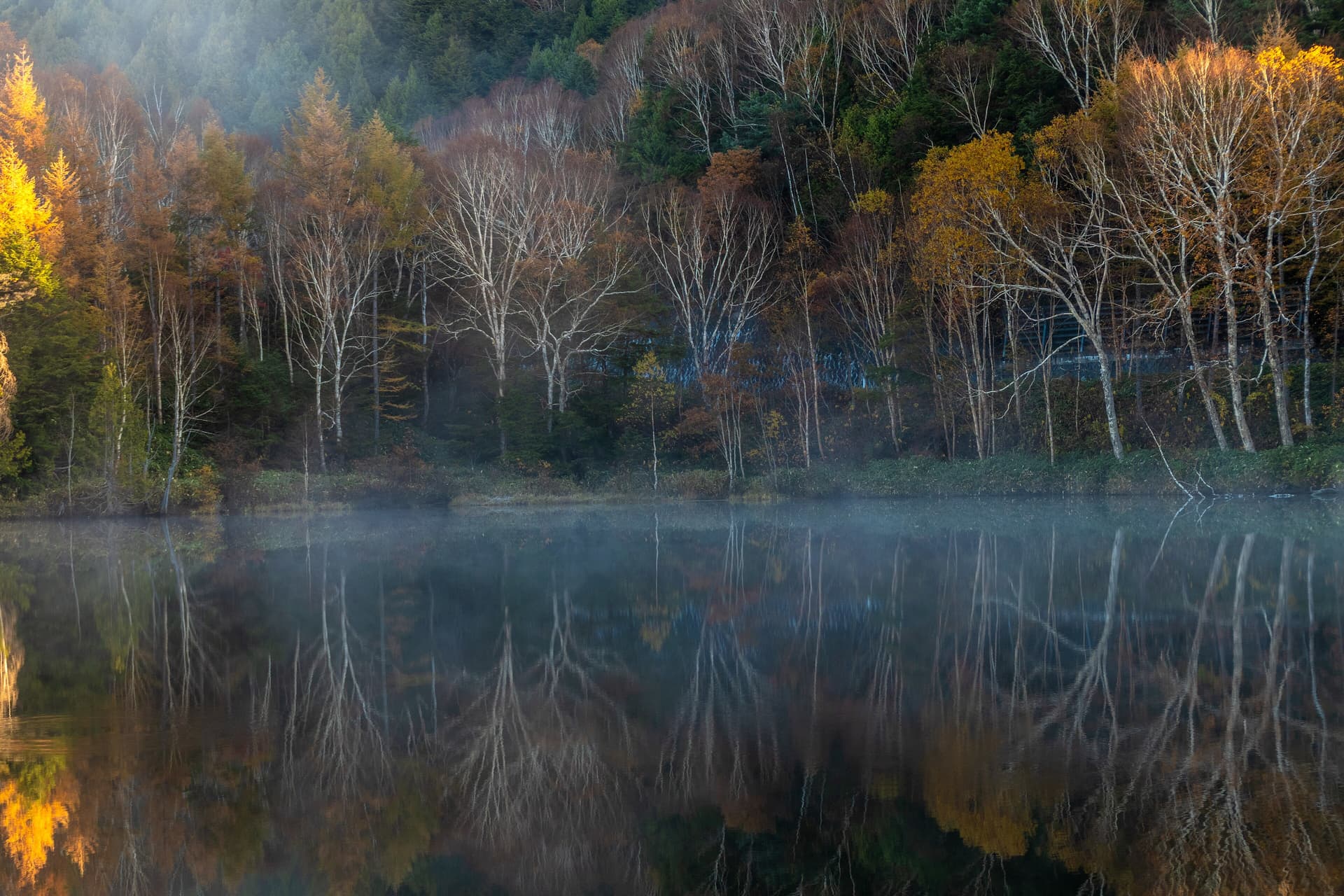
Yamanouchi (山ノ内町) means “within the mountains”, and the name is exact. The town fills a valley in the north-east corner of Nagano Prefecture and runs up to the Gunma border along the crest of Shiga Kogen. Around 11,000 people live here, farming apples and buckwheat and looking after visitors — something the valley has done for a very long time.
A short history
Tradition credits the discovery of the springs at Shibu to a wandering monk some 1,300 years ago. By the Edo period the valley’s baths were an established stop for travellers, feudal lords and poets; Kobayashi Issa wrote haiku in Yudanaka. The railway reached Yudanaka in 1927, opening the hills above to skiers, and Shiga Kogen grew into one of Japan’s first ski destinations.
The Jigokudani Monkey Park opened in 1964. A photograph of a bathing macaque on the cover of Life magazine in 1970 made the “snow monkeys” known abroad, and the 1998 Nagano Winter Olympics, which held alpine skiing and snowboarding events in Yamanouchi, did the rest.
The lie of the land
- Yudanaka (about 600 m): the railway terminus and practical base.
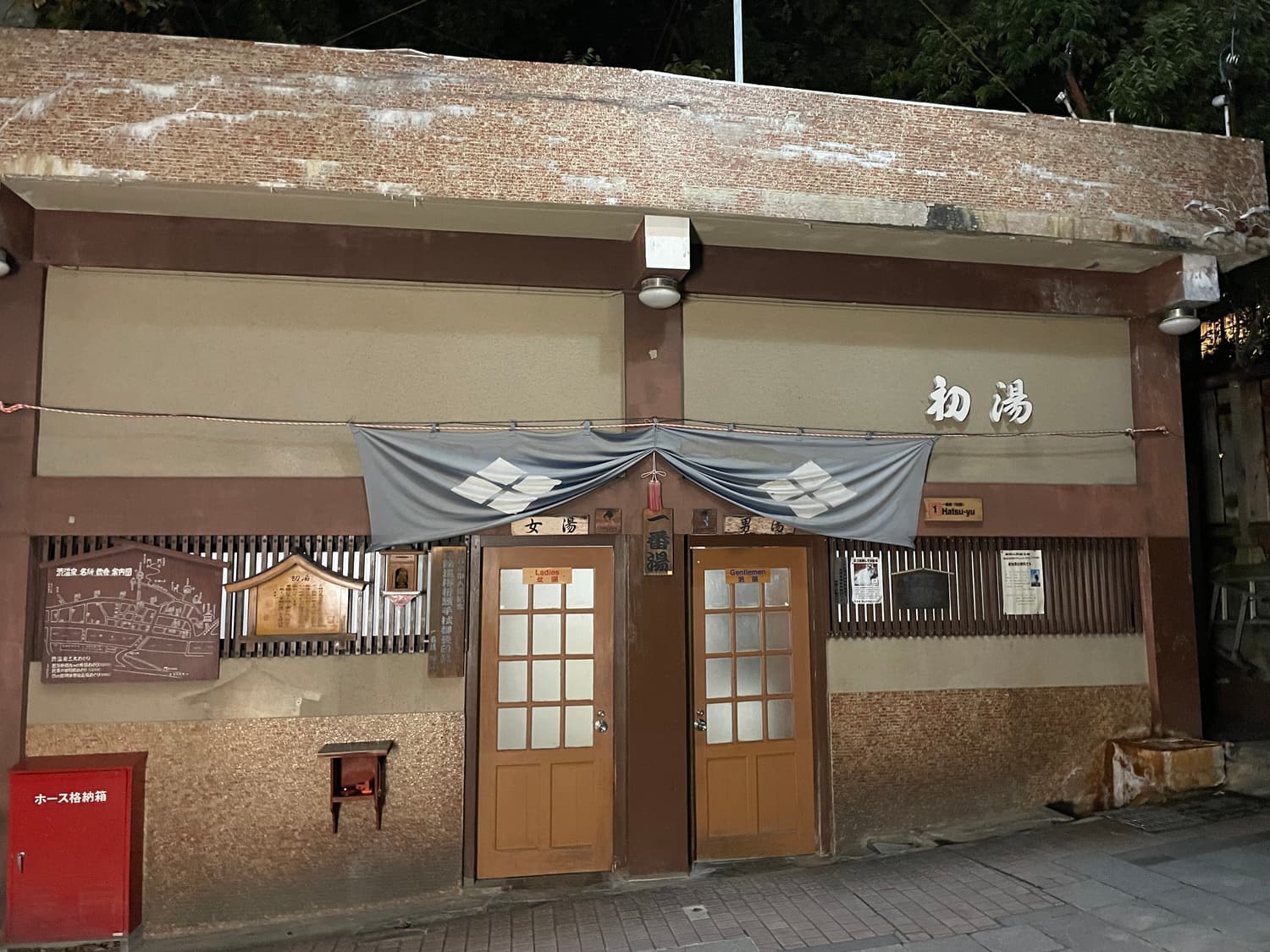
- Shibu Onsen: 2 km upstream, the historic bath town with nine public bathhouses.
- Kanbayashi (about 800 m): the forest trailhead for the monkey park.
- Shiga Kogen (1,300–2,300 m): ski areas and hiking trails, half an hour up the road.
- Kita-Shiga: the Ryuoo, Yomase and Komaruyama ski hills and SORA terrace, north of Yudanaka.
Onsen etiquette — and tattoos
Bathing is the same everywhere in Japan, and simple once you know it:
- Baths are separated by sex, and you bathe naked. Swimwear is not worn.
- Wash first. Rinse thoroughly, or soap and shower where there are showers, before you get in. In Shibu’s small bathhouses, scoop water from the tub with a bucket and wash beside it.
- Keep your towel and your hair out of the water.
- The water can be very hot. Add cold water if others agree, get in slowly and get out if you feel light-headed. Do not bathe after heavy drinking.
- Dry off before stepping back into the changing room, and keep your voice down.
Tattoos: many large hotels and public baths in Japan still refuse tattooed guests, but Yamanouchi is easier than most. Shibu Onsen’s nine public bathhouses are widely reported to accept tattoos, and many ryokan have private baths (kashikiri-buro) you can lock and use alone or as a family. Policies are set by each establishment, so ask before you book rather than at the bath door.
Snow monkey etiquette
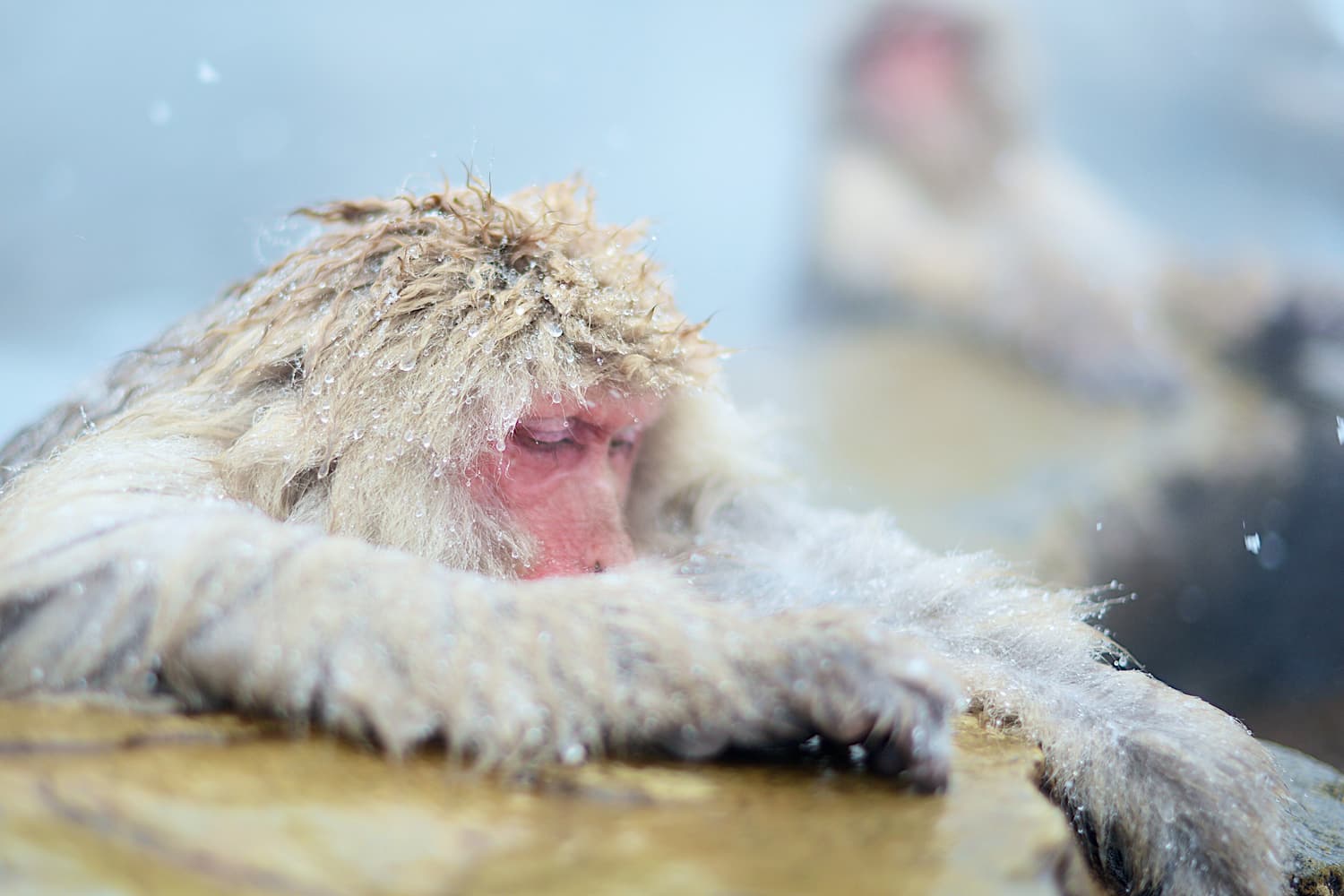
The monkeys are wild and unafraid, which is exactly why the rules matter: do not touch them, do not feed them, do not eat or rustle bags near them, and do not stare them in the eye. Keep small children close. Photography is welcome; selfie sticks and drones are not. Full details on the monkey park page.
What to eat and drink
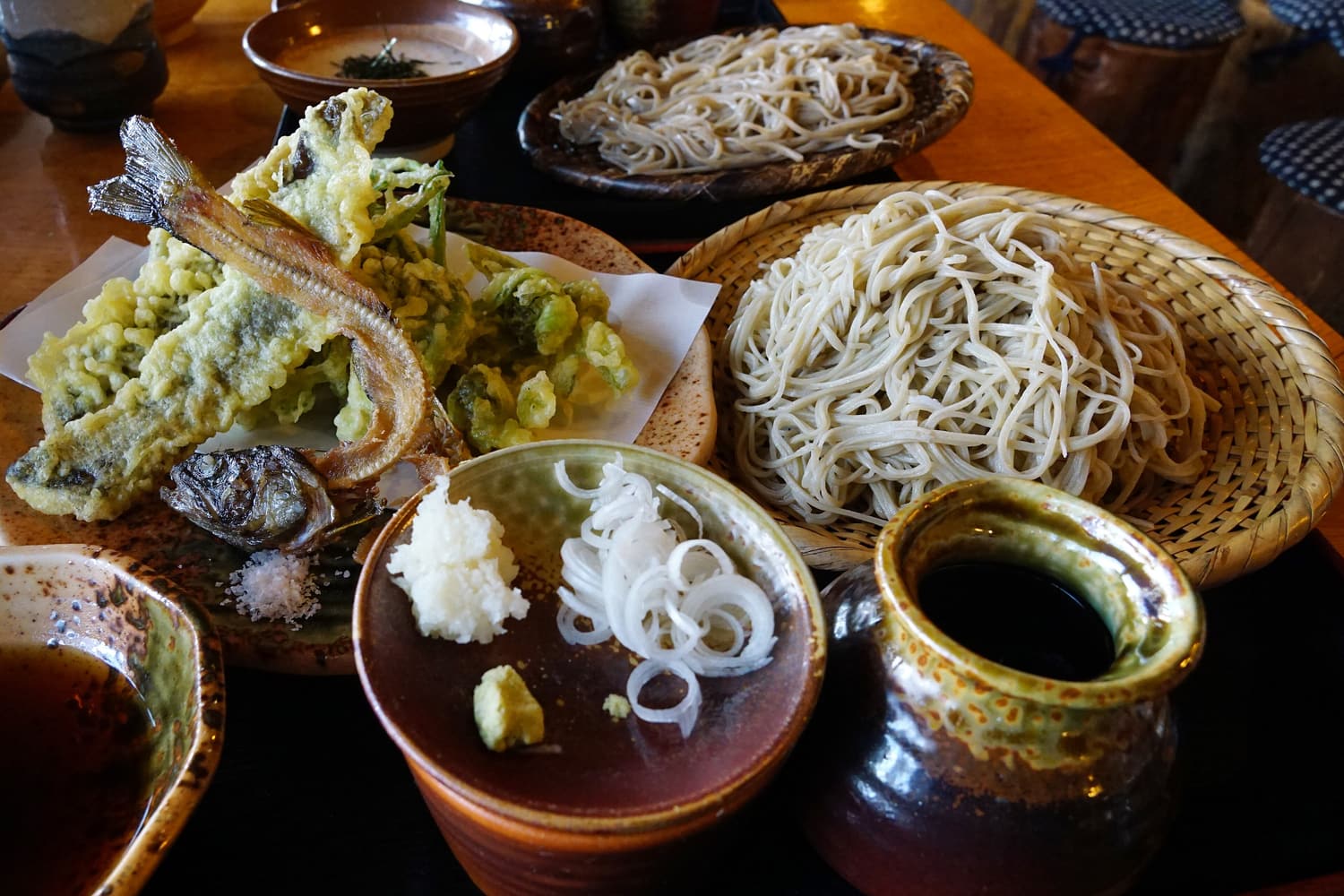
- Soba: Nagano is Japan’s buckwheat heartland. Order it cold on a bamboo tray (zaru) or hot in broth; Yamanouchi’s Sugakawa district has its own rustic style.
- Apples and fruit: orchards line the valley floor. Apples are picked from late summer to November — Fuji last of all — and you will see peaches and grapes in season, plus juice and cider all year.
- Ryokan dinners: a multi-course kaiseki meal of river fish, mountain vegetables, mushrooms, Shinshu beef or pork and local rice is half the reason to stay overnight.
- Sake and beer: Tamamura Honten brews Engi sake and the widely admired Shiga Kogen Beer in Yamanouchi.
- Snacks: onsen manju (steamed bean-paste buns), hot spring eggs, oyaki dumplings stuffed with vegetables, and chestnut sweets from nearby Obuse.
Money, connectivity and practicalities
- Cash: larger ryokan and the ski areas take cards, but small restaurants, bathhouse fees, some buses and shops are cash only. Withdraw yen in Nagano, or at post office and convenience store ATMs in the valley.
- Language: staff at the monkey park, the station and most inns that host foreign guests manage basic English. A translation app covers the rest.
- Wi-Fi: standard in accommodation; patchy on the trail and in the mountains.
- Shops: there is a convenience store and a supermarket in the Yudanaka area, but nothing in Shibu’s lanes stays open late.
- Electricity: 100 V with two flat pins, as elsewhere in Japan.
What to pack
Winter (December–March): insulated waterproof boots with real grip, thermal layers, a down jacket, hat, gloves and a neck warmer. Temperatures in the valley are often below freezing and the trail is icy. Slip-on crampons are cheap to buy and can be rented at the trailhead. A dry bag or lens cloth helps with the steam around the pool.
Spring and autumn: layers and a rain jacket; mornings are cold. Summer: light clothes for the valley, a fleece for Shiga Kogen, insect repellent and a hat. Ryokan supply yukata, towels and toiletries all year.
Safety and health
- Ice is the main hazard in winter — on the trail, on Shibu’s cobbles and on bathhouse floors.
- Monkeys can snatch food and occasionally nip if cornered. Keep bags closed and give them space.
- Asiatic black bears live in the surrounding forest. Encounters are rare; on quiet hiking trails in Shiga Kogen, carry a bell.
- The area is volcanic. Obey closures around Mount Kusatsu-Shirane near Shibu Pass.
- For emergencies dial 119 (ambulance and fire) or 110 (police). There are clinics in Yamanouchi and hospitals in Nakano and Nagano.
Suggested itineraries
One day from Nagano
Early express bus to the Snow Monkey Park; two hours on the trail and at the pool; bus down to Shibu Onsen for soba and a stroll; Nagaden train from Yudanaka with a stop in Obuse; back in Nagano for dinner.
Two days, one night
Day 1: morning at Zenko-ji, train to Yudanaka, check in at Shibu, bath circuit in yukata before and after dinner. Day 2: monkeys at opening time, then up to Shiga Kogen or SORA terrace, or back via Obuse.
Three or four days
Add a ski day or the Ike-meguri hike in Shiga Kogen, Mount Yokote on a clear morning, and a day at Togakushi or Nozawa Onsen.
Sights in and around Yamanouchi
 Snow monkeys & onsen towns
 Jigokudani Snow Monkey Park
Wild macaques in a hot spring
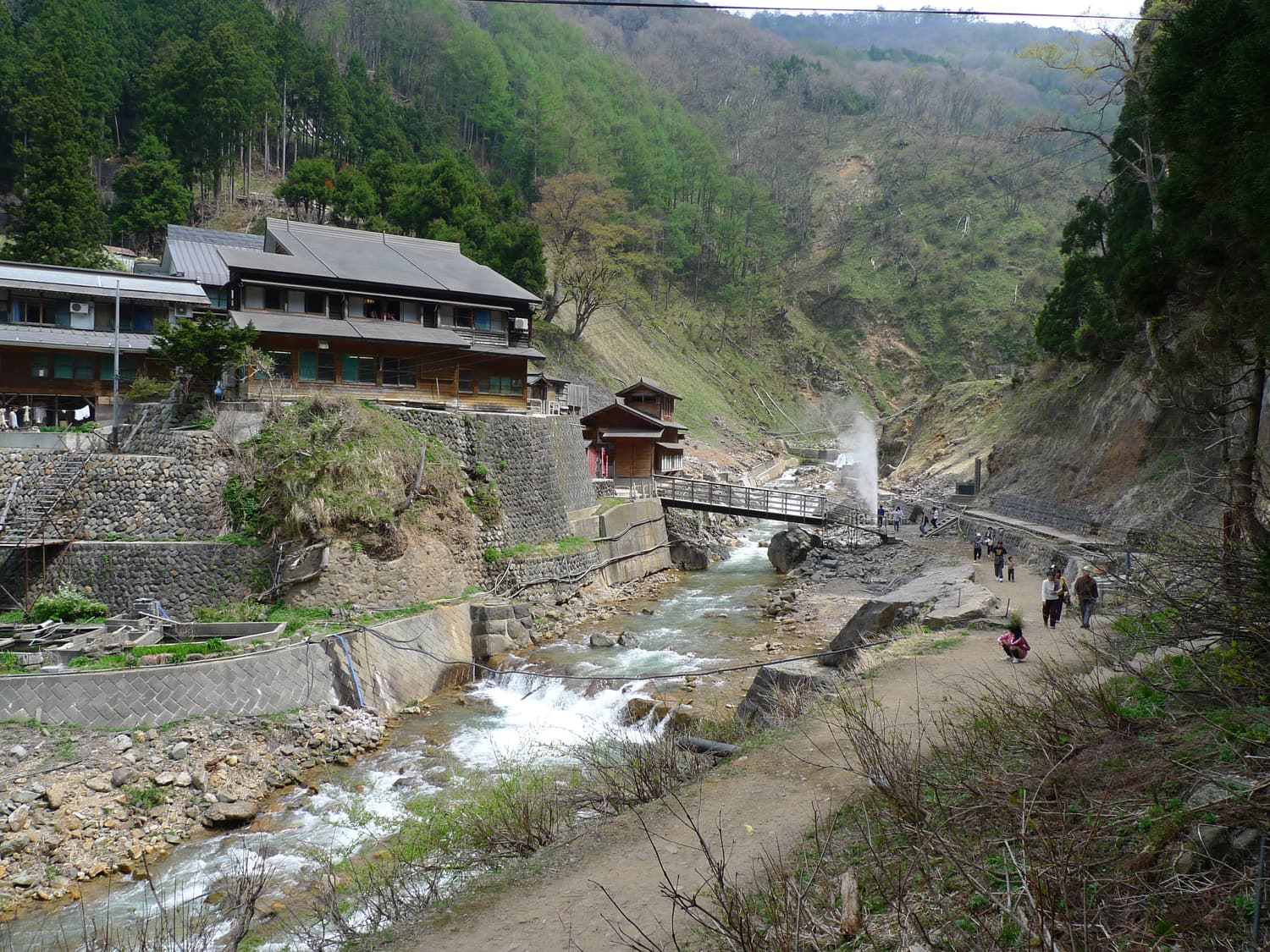
The only place in the world where wild monkeys are known to bathe in a hot spring. A 1.6 km forest trail from Kanbayashi leads to a steaming pool in the Yokoyu River valley where a troop of Japanese macaques warms up through the long Nagano winter.
 Snow monkeys & onsen towns
 Shibu Onsen
Nine bathhouses and cobbled lanes
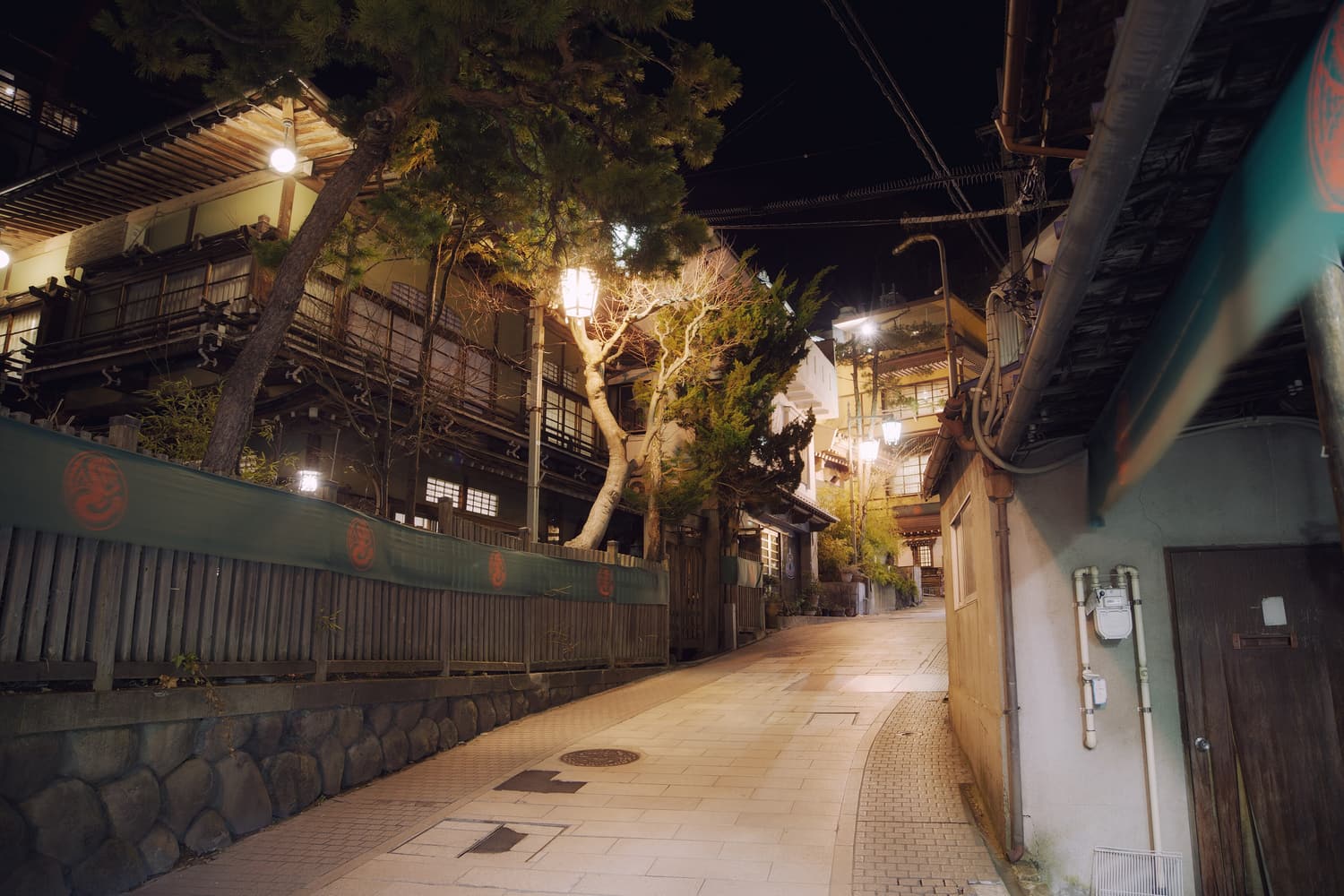
A hot spring town with some 1,300 years of history, packed into a few narrow cobbled lanes of wooden ryokan. Overnight guests borrow a key and tour nine public bathhouses in yukata and wooden sandals, stamping a towel at each for good fortune.
 Snow monkeys & onsen towns
 Yudanaka Onsen
The gateway hot spring town
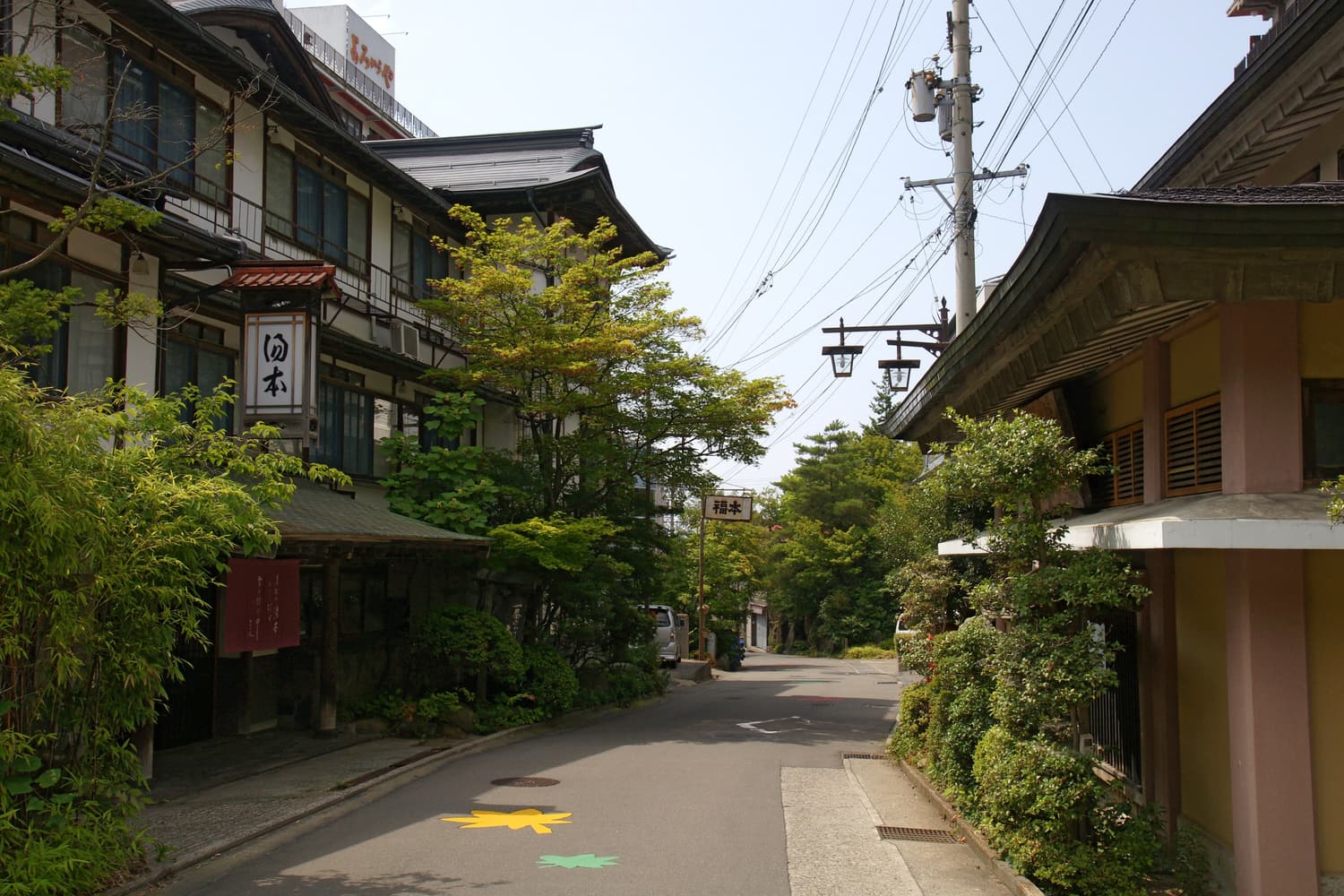
The end of the Nagano Electric Railway and the front door to Yamanouchi: a lived-in onsen town with a day bath beside the station, family-run ryokan, footbaths and buses to the monkeys and Shiga Kogen.
 Snow monkeys & onsen towns
 Kanbayashi Onsen & the Monkey Trail
The forest trailhead
A hushed cluster of inns and cafés among tall cedars at the start of the path to the monkey park. From here the Yumichi trail runs level through the forest to Jigokudani and the old Korakukan inn, where the monkeys’ bathing habit began.
Day trips and onward travel
- Obuse: Hokusai’s museum and chestnut sweets, 25–30 minutes down the Nagaden line.
- Zenko-ji: Nagano’s great temple, easily combined on arrival or departure.
- Togakushi: cedar avenues, shrines and soba in the mountains beyond Nagano.
- Matsumoto: the black castle, about 50 minutes south of Nagano by train.
- Nozawa Onsen: a ski village with 13 free bathhouses, under an hour away by car.
- Hakuba: the big-mountain ski valley of the Northern Alps and another 1998 Olympic venue, about 70–75 minutes by bus from Nagano Station. Better as a separate stay than a day trip.
Ready to book? See our ranked snow monkey tours, or sort out transport and a ryokan first.