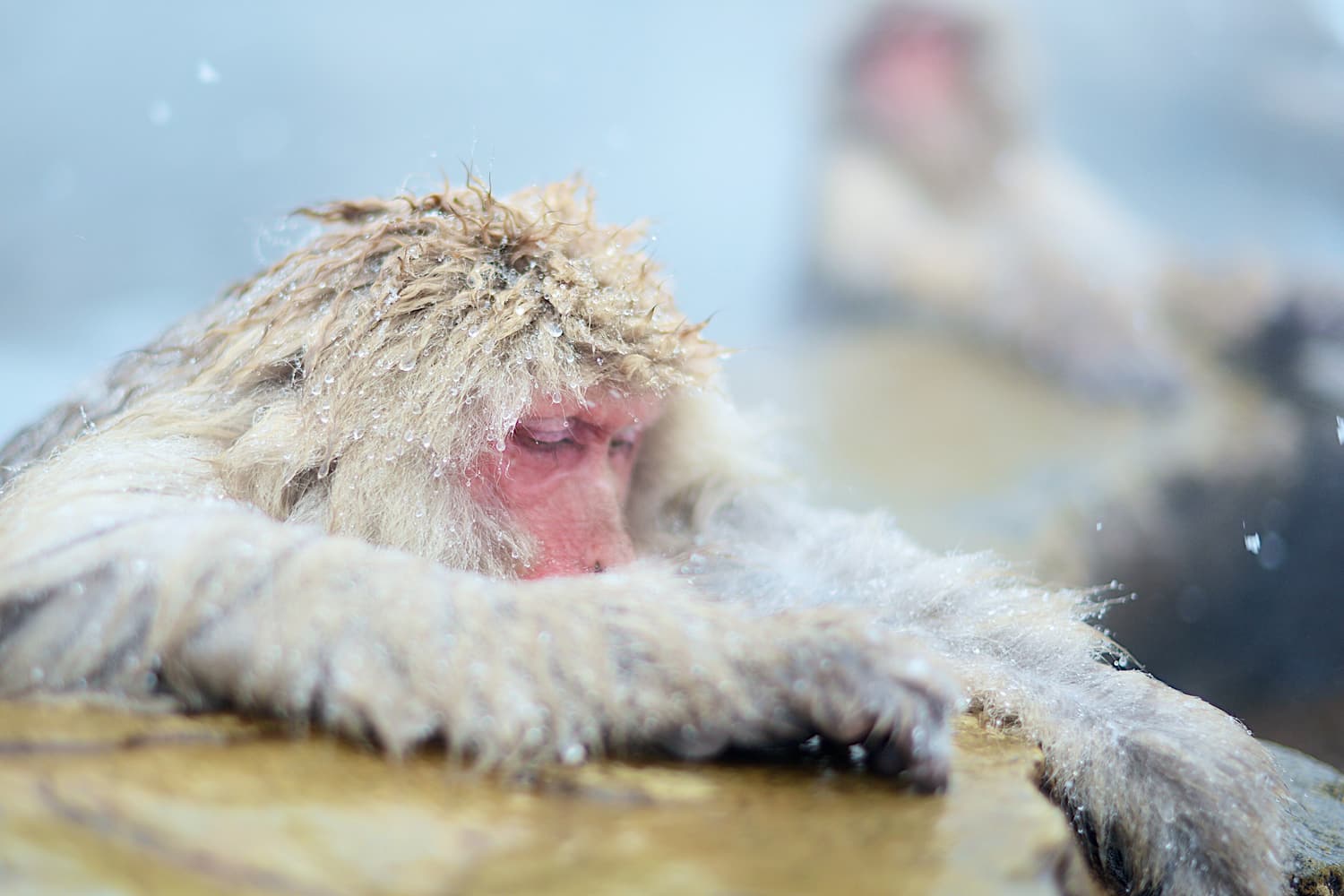
The short answer: January and February for the picture everyone has in mind — monkeys up to their necks in steaming water with snow on their heads. But the park is open every day of the year, and each season in Yamanouchi has a real case to make.
Winter (December to March): the snow monkey season
Snow usually settles in the Jigokudani valley from late December and lasts into March. This is when the monkeys bathe most, because the pool is the warmest place around. Days in the valley hover near freezing, nights fall well below, and Shiga Kogen above has deep, dry powder from December through March.
It is also the busiest time. Tour coaches arrive from mid-morning, and the weeks around New Year and the Lunar New Year are crowded. Come at opening time or late in the afternoon, and book ryokan early. In early December and late March the snow may be thin or absent in the valley, though the monkeys still often bathe on cold days.
Spring (April to June): blossom and baby monkeys
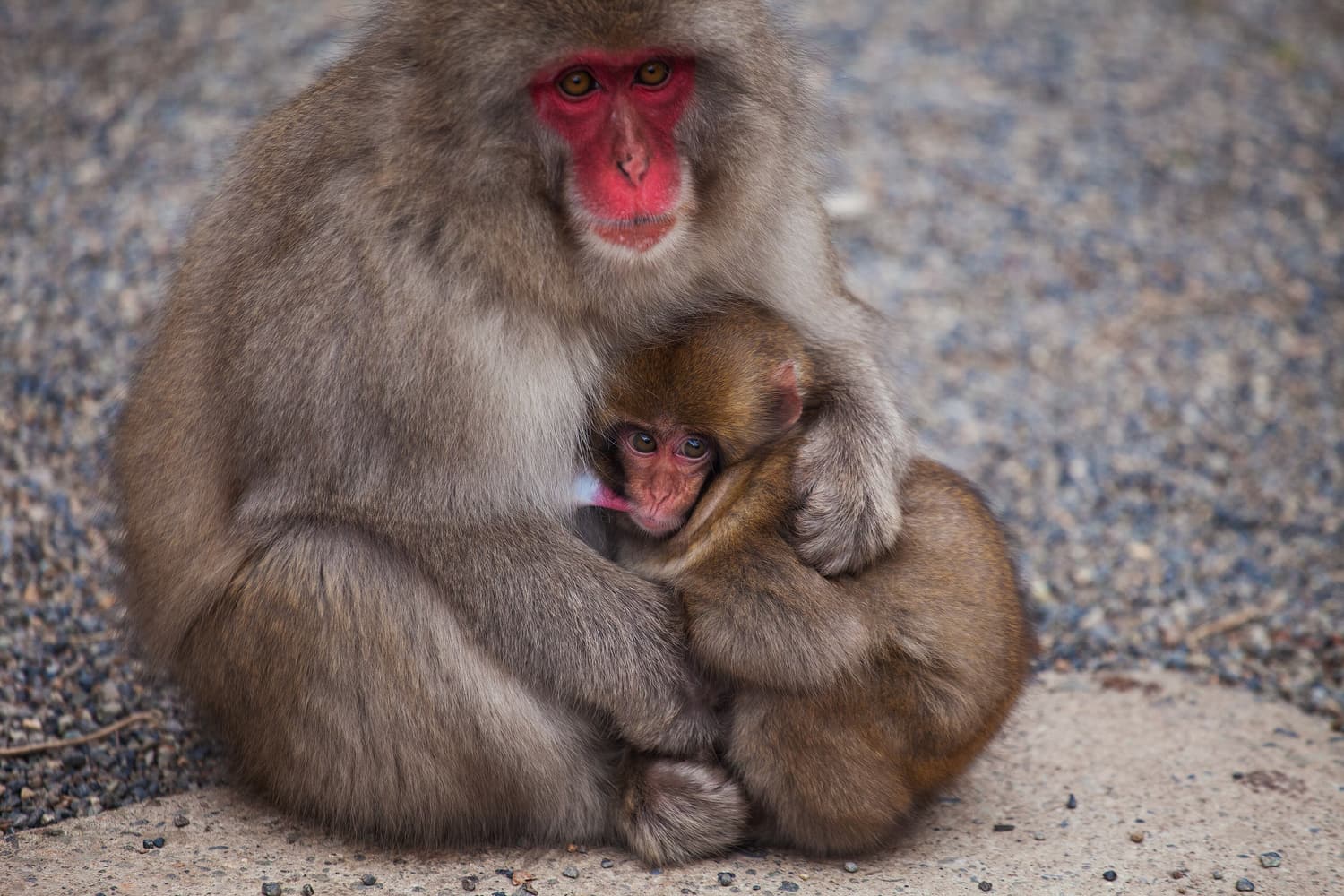
Snow melts from the valley in April, and cherry blossom reaches Yudanaka and Shibu around mid to late April — later than Tokyo by two or three weeks. From late April through June the year’s babies are born, and watching them cling to their mothers and take their first swims is a delight in its own right. The monkeys bathe less as it warms. Shiga Kogen’s upper lifts often stay open for spring skiing into early May, and the road over Shibu Pass reopens in late April.
Summer (July to September): green valleys, cool highlands
The rainy season runs from about mid-June to mid or late July; after that the valley is hot by day, in the high 20s to low 30s °C, while Shiga Kogen stays around ten degrees cooler. This is hiking season on the plateau, firefly season in July and the quietest time at the monkey park. The monkeys are around, playing and foraging, but seldom in the water. Apples, peaches and grapes begin to appear at roadside stalls from August.
Autumn (October to November): colour — and an honest warning
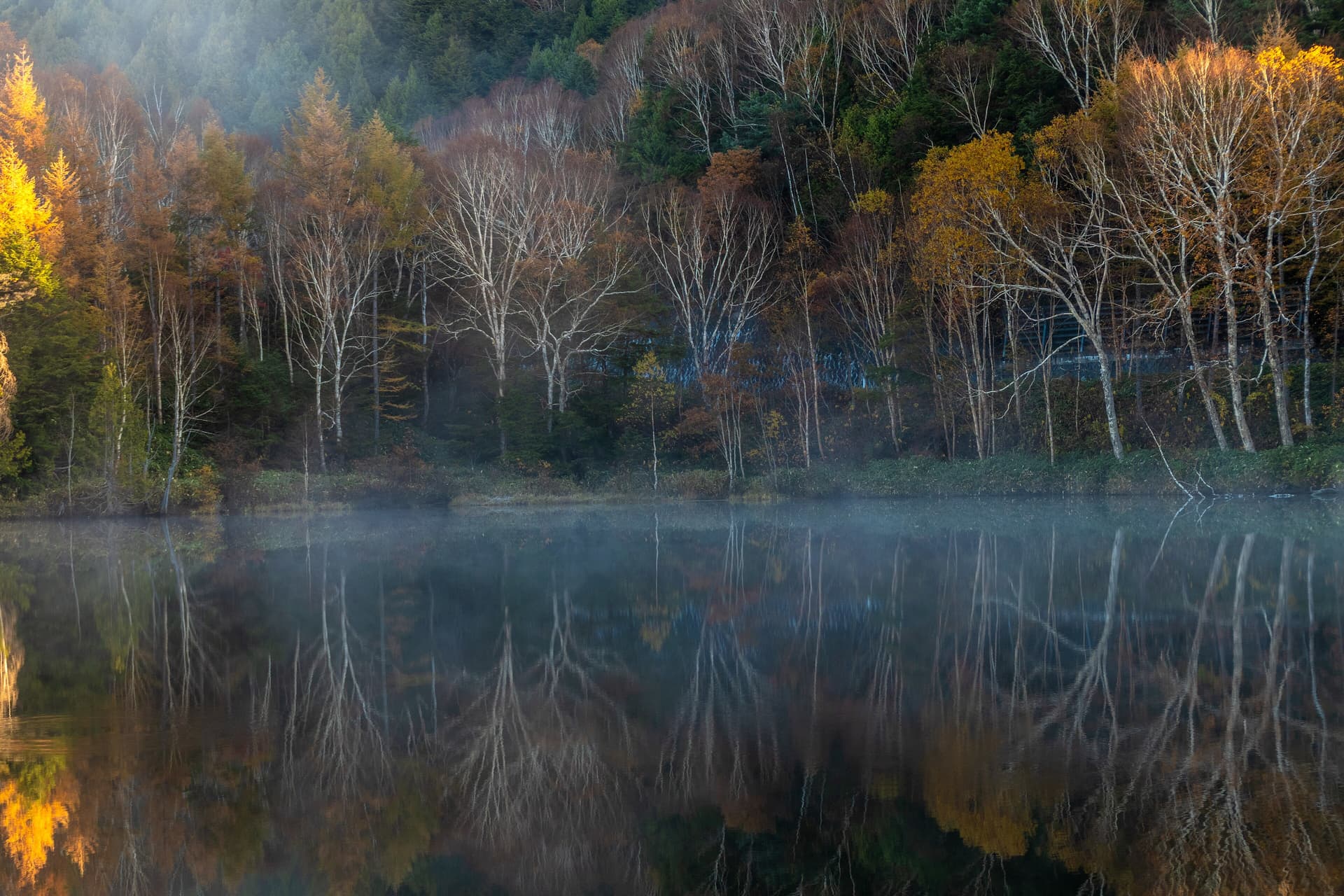
Autumn colour starts at the top of Shiga Kogen in late September, reaches the plateau’s ponds in early to mid October and arrives in the Jigokudani valley and the onsen towns in late October and early November. It is a beautiful, uncrowded time to walk and to bathe.
The warning: in autumn the mountains are full of nuts and fruit, and the troop sometimes stays up in the forest. September to November is when the monkeys are most likely to be late or absent. Check the park’s live camera on the morning of your visit and keep your plans flexible.
Month by month
| Month | Valley weather | Monkeys | Also good for |
|---|---|---|---|
| January | Cold, snowy | Bathing most days — peak season | Powder skiing, frost-covered trees on Mount Yokote |
| February | Cold, deepest snow | Bathing most days — peak season | Skiing, snowy onsen lanes |
| March | Cold, snow thinning | Often bathing | Spring skiing, fewer crowds late in the month |
| April | Cool, snow melting | At the park; bathing less | Cherry blossom late in the month, first babies |
| May | Mild | Babies; rarely bathing | Fresh green, last skiing on the highest lifts |
| June | Warm, rainy from mid-month | Babies playing | Quiet trails, alpine flowers |
| July | Hot, rain easing | Around the pool, seldom in it | Fireflies, Shiga Kogen hiking |
| August | Hot | Around the pool, seldom in it | Highland walks, SORA terrace sunsets |
| September | Warm | May be absent some days | First colour on the peaks, chestnuts in Obuse |
| October | Cool, clear | May be absent some days | Autumn colour, apples |
| November | Cold, first snow possible | Returning; bathing on cold days | Late colour, quiet ryokan, ski areas begin to open |
| December | Cold, snow from late month | Bathing more as it freezes | Early ski season, New Year in an onsen |
Ski season in Shiga Kogen
Thanks to its altitude, Shiga Kogen has one of Japan’s longest seasons: the first lifts typically open in mid to late November and the last close in early May, with the whole linked area usually running from late December to late March. January and February bring the coldest, lightest snow. Dates depend on snowfall each year, so check the resort’s announcements.
Crowds and prices
- Busiest: late December to February, above all New Year, the Lunar New Year and weekends. Ryokan in Shibu can sell out months ahead.
- Also busy: Golden Week (late April to early May), the Obon holiday in mid-August and October weekends in Shiga Kogen.
- Quietest and best value: April outside Golden Week, June, early July, September and November.
- Time of day: whatever the season, the monkey park is calmest in the first hour after opening and the last hour before closing.
Events worth knowing
- Winter evenings: the lantern-lit lanes of Shibu Onsen under snow need no festival to be special.
- 15 January: the Dosojin Fire Festival at Nozawa Onsen.
- July: fireflies at Ishi-no-yu in Shiga Kogen.
- Summer: evening events and fireworks in the onsen towns on selected dates — ask your ryokan.
- Mid-September to mid-October: chestnut harvest in Obuse.
Once you have picked your dates, look at where to stay and the best tours.